Best rated alpaca adventure tours and holiday advices in Denver, Colorado

Hot alpaca adventures package and holiday guides in Denver, Colorado: Kids will love visiting an alpaca farm because the animals are so friendly and docile. They can pet the animals, feed them, and even help with shearing and halter training. Getting kids involved in the farm experience will teach them responsibility and instill a lifelong appreciation for the land that supports their families. Not to mention, the physical activity required for herding and feeding alpacas offers countless health benefits. This type of exercise promotes cardiovascular health and builds muscle strength. It is also an excellent stress-reducer, as the alpacas’ gentle touch and soothing sounds can have a calming effect on both humans and children. Read even more details at alpaca experiences in Colorado.
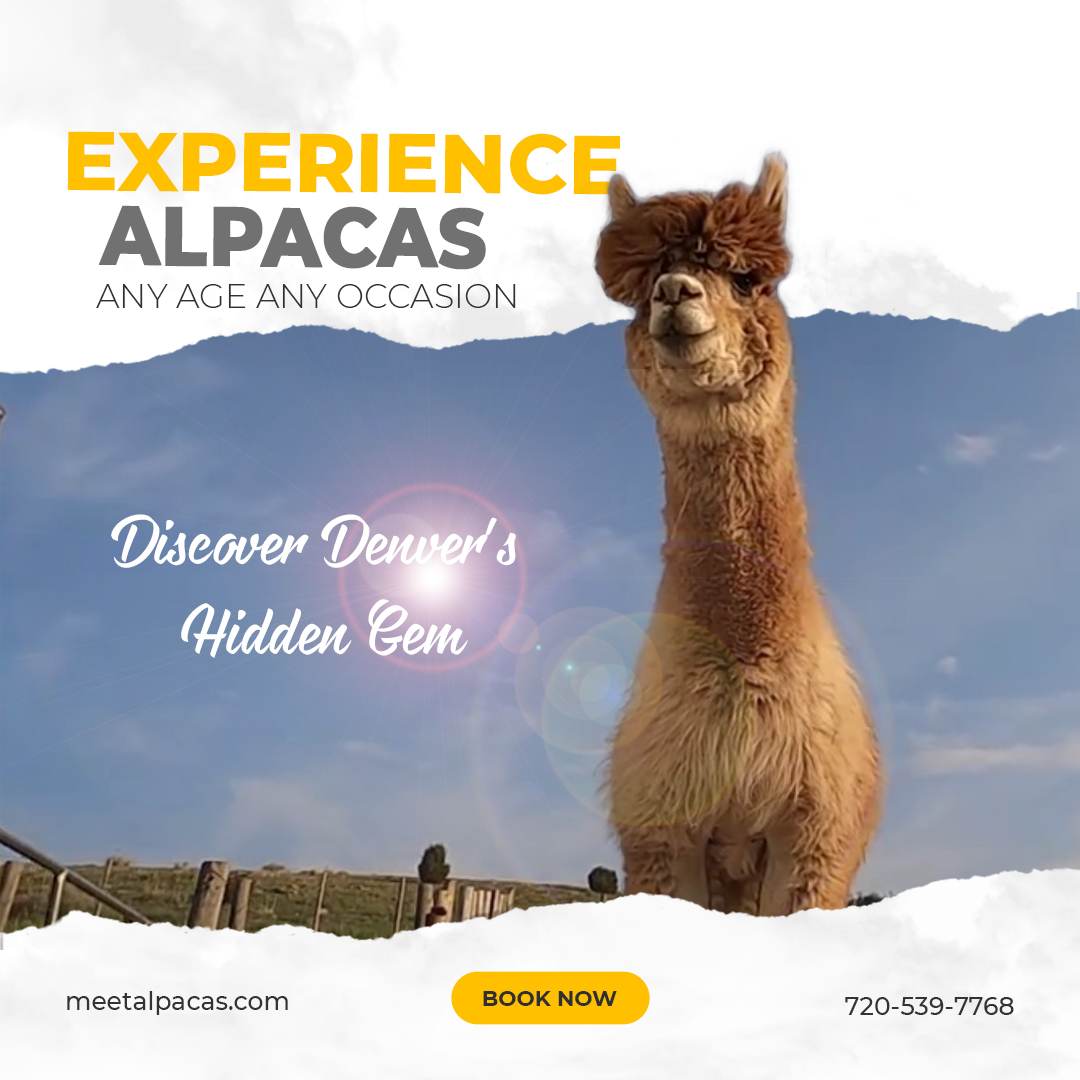
alpaca adventures package in Denver, Colorado

Alpacas communicate through various sounds and body language, including gentle humming, grunting, and other nuanced vocalizations. They can also “spit” or reject male advances to let a female know she is unreceptive to his advances. The alpaca’s padded feet minimize soil compaction, allowing for sustainable, eco-friendly agricultural practices. Additionally, their manure is a natural fertilizer that enhances soil quality. This symbiotic relationship between land and herd promotes sustainable practices and healthy, nutritious foods.

Still, you should always remember to treat alpacas with space and respect. Alpacas don’t like being grabbed or held, and they are often particularly sensitive to being touched on the head. Instead, allow them to approach you at their own pace. This often results in a much more rewarding and affectionate response. If you’re looking for an age-appropriate experience for the entire family, you’ve met your match. Interacting with alpacas is safe for everyone from little kids to elderly members of your crew. There are no age restrictions — kids 2 and under are free.

As herbivores, alpacas only eat vegetation. They eat mostly grass, but their diets can also include leaves wood, bark or stems. Like other ruminants, alpacas have a three-chambered stomach that digests the roughage efficiently. Unlike other grazers, alpacas don’t eat much. According to the Alpaca Owners Association, a 125-lb. (57 kg) animal only eats around 2 lbs. (907 grams) per day. In general, alpacas eat 1.5 percent of their body weight each day.

It’s a photo-worthy activity: If you’re looking for a fun experience where you can take some Instagram-worthy shots, meeting alpacas is for you. You’ll be able to stand with them, pet them, feed them, and take photos with and of them. Not only are you interacting with an animal you’ve likely never hung out with before, but you’re also doing it in an incredibly scenic state. Capture some photos of you smiling with an alpaca for all your followers and friends to enjoy. When you go behind the scenes on the ranch, you learn about much more than just the animals. You have the opportunity to talk about the economy, trade, production, local handmade goods, and so much more.

Do alpacas make noise? Alpacas are very quiet, docile animals that make a minimal amount of sound. They do make a humming sound as a means of communication or to express concern or stress. Most communication between alpacas is nonverbal. Occasionally you will hear a shrill “alarm call,” which usually means they have spotted something of concern nearby, and they are warning others in the herd. The concern may be a predator, or may be something they are not familiar with, like a cow or horse in a neighboring field. Male alpacas also “serenade” females during breeding with a guttural, throaty sound called “orgling.” See more information at https://meetalpacas.com/.

Are alpacas dangerous? No. Alpacas are pleasant to be around and generally easy to handle. Alpacas do not head-butt. They do not have horns or hooves like other livestock. They move gracefully and adroitly about the field and are therefore unlikely to run into or over anyone intentionally. Males develop sharp fighting teeth at about three years of age which can cause injury to both humans as well as other alpacas. Alpacas will reflexively kick with a hind leg, particularly if surprised from behind. While the impact of an alpaca kick is not on par with a horse, it can create a bruise. Also, there is potential for toenails to cut skin.

Can alpacas thrive in locations with very hot or very cold climates? Generally, yes. Alpacas are amazingly resilient animals and have adapted successfully to the extremes of both very hot and very cold climates. In hot, humid climates, alpaca owners need to take extra precautions to make sure that the alpacas do not suffer from heat stress. These include shearing fleeces early in the year, providing fans and ventilation in the barn, and offering cool fresh water for drinking.

Alpacas hum; they make a sound like “mmm,” according to Alpaca Ventures. However, they also shriek when danger is present, and make a sound similar to a “wark” noise when excited. Fighting males scream, making a warbling bird-like cry. Alpacas in a herd all use the same area as a bathroom instead of defecating in random areas like many animals do. This behavior helps control parasites, according to the FAO. Males often have cleaner dung piles than females, according to Alpaca Ventures. Females tend to stand in a line and all go at once.

Samba tours Rio de Janeiro with RioSambaDancer

Samba tours Rio de Janeiro, Brazil 2024: This style of dance is not only fun, it also brings with it a variety of wonderful health benefits that will make you want to dance even more. Samba is a lively and beautiful style of dance that guarantees lots of fun times. But that’s not all. When you practice this wonderful style of dance on a regular basis, you will experience it’s benefits. Here are some of the perks of dancing samba: Samba dancing really gets your heart pumping. What happens is that you get more oxygen delivered to all parts of your body, which helps improve your body’s circulation. This will result in increased energy levels, which will help you focus with more ease on tasks at hand and obtain better results. Read even more info on Rio night tour.

Carnaval is the biggest event of the year on the city’s calendar. The festival brings a riot of color and endless action to the streets of Rio each February (sometimes late January, depending on the year). Some visitors plan their entire trip to Brazil around Carnival, and if you are going to attend, you need to do some serious advanced planning. The celebrations begin shortly after New Year, but the splendor and extravagance reaches its spectacular climax in the four days before Ash Wednesday, attracting hundreds of thousands of spectators to its street parades, samba parties, and shows. Other Brazilian cities celebrate Carnaval; it is also a major tourist event in Bahia and Recife, but Rio’s is the most lavish.

The baterias of samba schools are so famous in Rio de Janeiro that during the year when there are not in Carnival, they play in ceremonies, celebrations, and parties around town. Passistas – Carnival’s leading samba dancers. Of course, no parade can be bereft of the Passistas or samba dancers that dance the entire length of the samba strip. This group of 15-20 dancers is chosen through a competition each year and has the honor of representing their samba school. Well-known lead vocalists and a group of fellow vocalists do justice to the samba songs that are composed for especially for the parade.

A busy day on Copacabana Beach – This 2.5-mile stretch of golden sand is synonymous with Rio de Janeiro. Packed with people on warm summer weekends and throughout the Christmas holidays, it’s a lively and fun scene and the beach where people from all walks of life come for sun, surf, and fun. The beach is wide, so be prepared for a significant walk to the water’s edge. The water is refreshingly cool and the waves can be surprisingly large depending on the day. Rio does a good job of keeping people on the beach safe, don’t be surprised if you see a red helicopter doing water rescues if the surf is up. Chairs and umbrellas can be rented for a reasonable fee from organized beach service operators, who also provide cold drinks and meals. They also provide free showers.

The samba parade held to celebrate the Rio Carnival is undoubtedly the biggest attraction on earth, with visitors from around the world flocking to Rio for a week of dancing, singing, and partying. To vibe with the rhythm of the samba the only place to be is the Rio Carnival. In all likelihood, the quest to experience the Carnival once could turn out to be an annual habit for any tourist. The Carnival is the best time to experience the best of Brazilian culture, for this is one occasion that truly sums up the carioca way of life. Since 1984, the parade is held at the Sambadrome where twelve of the top samba schools vie for the prestigious championship title every year.

How To Get Ready For the tour? It is important to have positive energy and be ready to have fun! Be sure to arrive on time for the class so that we can start on time and not waste any of your precious time! We recommend wearing comfortable clothing and no jewelry. Bring a picture of your ID. Bring positive energy with you and be ready for a great samba evening! What’s the Best Time For A Night Tour? The best time for a Samba night tour is as soon as you get to Rio. Our tour guide can recommend lots of things for you in terms to enjoy your time. Book now! See extra info at https://www.riosambadancer.com/.

Rio Samba Dancer partners with major samba schools to offer spots for people to participate in the carnival parades in Rio de Janeiro. How it works: We will send you photos of available costumes and you select your preferred costume. You provide your measurements including shoe size, shirt size, waist size, etc. to ensure proper costume fitting. On the day you arrive in Rio de Janeiro, we will deliver the costume to your hotel. You will join the samba school’s parade contingent and participate by dancing in the Rio carnival parade along the Sambadrome during the designated evening.

Best alpaca adventures package and vacation tricks and tips in Denver, Colorado

Denver, Colorado alpaca experiences with meetalpacas.com: Kids will love visiting an alpaca farm because the animals are so friendly and docile. They can pet the animals, feed them, and even help with shearing and halter training. Getting kids involved in the farm experience will teach them responsibility and instill a lifelong appreciation for the land that supports their families. Not to mention, the physical activity required for herding and feeding alpacas offers countless health benefits. This type of exercise promotes cardiovascular health and builds muscle strength. It is also an excellent stress-reducer, as the alpacas’ gentle touch and soothing sounds can have a calming effect on both humans and children. See additional information on alpacas farm in Denver, Colorado.

alpacas farm in Denver, Colorado

Understanding the economics of alpaca farming before investing in these animals is important. It is also a good idea to engage an accountant or tax specialist for guidance in setting up bookkeeping systems and determining the appropriate deductibles and allowances to apply to your particular situation. Alpacas are herd animals, and they thrive in social environments. They are primarily herbivores and subsist on a diet of grasses and hay, so pasture management is an important part of their overall well-being. Regular health checkups, vaccinations, and shearing are other important aspects of their overall care.

Here’s why an alpaca experience is perfect for your upcoming trip to Denver. Alpacas are adorable, fluffy, and friendly animals. People are often surprised by just how sociable they are and how much they enjoy human affection. They are also incredibly calm creatures with steady temperaments. This makes them perfect for the whole family. They don’t display erratic behavior, making them more predictable around children.

For many years, zoologists assumed alpacas and llamas had descended from guanacos, and they were classified in the genus Lama. However, in a 2001 paper titled “Genetic analysis reveals the wild ancestors of the llama and the alpaca” in the journal Proceeding of the Royal Society B, researchers showed there is “high genetic similarity” between the alpaca and the vicuña, and between the llama and the guanaco. They recommended that the alpaca be reclassified as Vicugna pacos.

Still, seeing alpacas on a ranch in what many consider to be a big city out West can be a bit mind-boggling. What is life like on the ranch? What does an alpaca eat? Do they run and play with each other? Are alpacas high maintenance and easy to care for? Get all your questions just like this (and more!) answered. Your expert guide will fill you in on what it’s like to live and work on an alpaca farm. It offers views of the gorgeous surrounding areas : Do you want to see Colorado mountain views without needing to hike? Whether you’re traveling with a large group, have small children in tow, or just don’t like hiking, this experience will allow you to take in scenic mountain views in a unique way. Are you looking for an educational opportunity for your kids? Come enjoy an alpaca experience that’s not only fun but also informative. This alpaca experience takes place on a fiber farm. This type of farm raises animals like alpacas, sheep, goats, llamas, angora rabbits, and more for their fleece and wool.

What is an alpaca? Alpacas (vicugña pacos) are members of the Camelid Family and are a domesticated species of the South American camelid. Camelids originated in North America over 40 million years ago. Camels migrated east via the Bering Strait and llamas migrated to South America. Today there are five recognized camelids breeds: camels, llamas, guanacos, alpacas, and vicunas. They vary by size and purpose, some being used primarily as pack animals and others valued for their fiber. All are used in a secondary meat market. Camels, llamas, and alpacas have been domesticated for thousands of years, whereas guanacos and vicunas continue to roam freely in herds. Many people are familiar with humped camels: the dromedary of Northern Africa, the Middle East, and Southern Asia, and the Bactrian camel of China and Tibet. Next in size is the llama (domesticated guanaco), followed by the alpaca (domesticated vicuna). Find more information at https://meetalpacas.com/.

Is it OK to have just one alpaca? No. Alpacas have very strong herd instincts and need the companionship of other alpacas to thrive, preferably three or more. Alpacas are livestock, and should not be treated as house pets. Alpacas should be kept with their own sex with a few exceptions. One exception is that male crias need to be kept with their mothers until weaning. Gelded males should not be housed together with females, as they can repeatedly attempt to breed the females. This can lead to serious health consequences for the females.

What do I need by way of shelter and fencing? Shelter requirements vary depending on the weather and predators in the area. As a rule, alpacas need at least a three-sided open shelter where they can escape from the heat of the sun in summer and from icy wind and snow in winter. Alpacas appreciate good ventilation, and owners have found that large overhangs outside of the shelter are used more often than an enclosed barn. In general, fencing construction and design is dictated by the threat of local predators. Also, fence openings need to be the correct size for alpacas to prevent injury from entangling their neck and limbs.

Alpacas hum; they make a sound like “mmm,” according to Alpaca Ventures. However, they also shriek when danger is present, and make a sound similar to a “wark” noise when excited. Fighting males scream, making a warbling bird-like cry. Alpacas in a herd all use the same area as a bathroom instead of defecating in random areas like many animals do. This behavior helps control parasites, according to the FAO. Males often have cleaner dung piles than females, according to Alpaca Ventures. Females tend to stand in a line and all go at once.

Quality Himalaya holiday attractions by Kyle Noble Quandel

Himalaya travel attractions by Kyle Quandel in 2024: Remember having seen this monastery before? Filming of the 1993 popular movie ‘Little Buddha’ took place here. This monastery-cum-fortress is listed in Bhutan’s tentative list for UNESCO inclusion. The Rinpung Dzong Monastery is home to 14 shrines and chapels which include the Sandalwood Stupa, Protector’s shrine, Temple of the Guru’s Eight Manifestations, the Clear Crystal Shrine, Chapel of the Eleven-faced Avalokiteśvara, Temple of the Treasure Revealer etc. See even more details at https://twitter.com/Kyle__Quandel.

The monasteries of Lo Manthang are filled with cultural beliefs. Thubche, Jyampa, and Chodye are the three monasteries of Lo Manthang. There are other monasteries like Namgyal, Charang, Loghekar, and Ghiling with years of historical values. Each corner of this kingdom reflects ancient Tibetan Buddhist culture and traditions. These places are covered in Chortens, paintings, manuscripts, sculptures, and other artefacts. These valuable assets reflect not only Buddhism, but also a way of living. Upper Mustang has the next level of beauty and significance.

Mount Kailash Yatra and Parikrama of Lake Mansarovar, one of the holiest paths to Nirvana, takes you to one of the most revered places in the Himalayas. Mansarovar and Mt. Kailash are two of the holiest pilgrimage areas to devotees of Hinduism, Jainism, Buddhism, Bonism and many other faiths. Each year thousands of devotees undertake the treacherous and rigorous journey through the mountains of Himalayas to reach this sacred land. For Hindus it is the holiest of the holy place as the abode of Lord Shiva. It also has geographical significance as four great rivers flow from it: the Karnali, the Indus, the Sutlej and the Brahmaputra, which drain the vast Tibetan Plateau to contribute to the Ganges in India. Kailash is an object of devout pilgrimage also for the Buddhists. Likewise, Lake Manasarovar is one of the highest sacred lakes in the world. The sacred lake is an important pilgrimage site for Buddhists and Hindus, as it is believed that bathing in the holy waters will cleanse one’s sins.

Jomsom Muktinath Trek, one of the most important pilgrimage sites of Nepal for both Buddhists and Hindus, reaches to the site of hundreds of years old monastery, caves, local tribes and scenic beauties of the different landscapes of Annapurna region. Each year it witnesses thousands of devotees flocking for worship in a hope to receive salvation. The temple of Muktinath is in the Annapurna region at an altitude of 3800 meters from the sea level. It is a gate way to Mustang from Manang in famous Annapurana circuit Trek route. Discover more info on Kyle Quandel.

Located at the base of Mount Kailash, Lake Manasarovar is a popular place of pilgrimage for both Buddhists and Hindu believers. It is the highest freshwater lake in the world. Tibetans consider it the most sacred lake in Tibet, its waters being of the highest quality of all the lakes in Tibet. According to Hindu believers a ritual bath and drink of its holy water has the power to clean the sins of a hundred lifetimes. The Jokhang is the main temple in Lhasa, Tibet, and is considered the ultimate destination for Tibetan pilgrims. Most pilgrims arrive by foot, circumambulate the temple, and, once inside the temple, hum, pray, present offerings, and bow or prostrate before a sacred sculpture of the Buddha.

Premium Montreal AirBnB deals with Leasing Kings and Mike Firmin

Top Air BnB Montreal offers with Leasing Kings and Mike Firmin: Maintenance and Management: Airbnb vs Long-Term Rentals – The operational demands and property upkeep vary significantly between Airbnb and long-term rentals. Airbnb requires more active management, including regular cleaning, restocking essentials, and frequent communication with guests. This can be time-consuming but is necessary to maintain high ratings and guest satisfaction. Long-term rentals, while generally requiring less day-to-day management, still demand attention to maintenance issues and tenant relations. Balancing time investment and management responsibilities is a critical factor in choosing the rental model that best aligns with the owner’s lifestyle and capabilities. Discover extra information on Leasing Kings and Mike Firmin Montreal AirBnB.

Jasper National Park in the Alberta province is the largest of Canada’s Rocky Mountain Parks boasting broad valleys, rugged mountains, glaciers, forests, alpine meadows and wild rivers. One of the top attractions is Athabasca Falls, a beautiful waterfall that thunders through a narrow gorge. Even when the water level in the upper Athabasca River is low, huge quantities of water pour over the falls. Several viewing platforms and trails where it is safe to photograph the picturesque scene are located around the falls. Motorists can cross over the falls by taking Highway 93A into the town of Jasper.

Air BnB Montreal solutions and Canada travel attractions with Leasing Kings and Mike Firmin: Get everything in writing: While you are booking your limo service, ensure that service providers provide everything like time, locations to vehicles, in writing. The more specific your requirements, the more precise the contract needs to be. Also, make sure that you understand all terms and conditions before putting a seal on the deal. This is very essential when you book a wedding limo service.

The Broken Group Islands region is made up of over one hundred small islands. The largest forested islands are Effingham, Turret, Turtle, Dodd, Jacques, Nettle and Gibraltar Island. The area is accessible only by boat, and is popular with kayakers. There are eight camping areas scattered on the islands. Campers should carry fresh water, because there is no fresh water available in the Broken Group Islands. The Broken Group is known internationally for awesome kayaking and wilderness camping. There are seven designated camping areas in the Broken Group Islands within national park boundaries, located on Hand, Dodd, Willis, Turret, Clarke, Gilbert, and Gibraltar Islands. All island visitors and users must camp in these designated campsites.

The ROM is Canada’s largest museum and houses more than six million objects, including a 90-foot-long baurosaurus, a 900-carat cerussite gem and a rare bust of Cleopatra VII. But the building itself is just as fascinating as what’s inside it. In 2007, the ROM opened the Lee-Chin Crystal designed by renowned architect Daniel Libeskind. The unusual, crystal-like design is said to have been inspired by the museum’s rock and gem collection. It stands adjacent to the ROM’s original building—first opened in 1914—and its impressive exterior is made of 75 per cent glass and 25 per cent brushed aluminum.

Montreal AirBnB solutions and Canada attractions from Leasing Kings and Mike Firmin: Prince Albert encompasses Canada’s southern boreal forest, where densely packed pine unfurls into flowering parkland. Home to elk, moose, beavers, otters, black bears and timber wolves, the national park is a sprawling wilderness sanctuary, and counts a growing herd of more than 400 plains bison among its inhabitants. You can canoe, hike, cross-country ski or snowshoe your way through timeless landscapes; we’d recommend the 5.3mi (8.5km) Spruce River Highlands Trail – it’s one of the only places where you can climb above the treeline to admire the surrounding hilltops.

Niagara Falls and the Niagara Gorge have been attracting tourists and daredevils for well over a century. Between the mid-19th and mid-20th centuries there were numerous attempts to plunge over the falls in various types of homemade boats and barrels. This, along with tightrope walkers and other spectacles, led to the adjacent town of Niagara Falls developing a carnival type atmosphere that still persists today. Families will enjoy a walk down Niagara’s outrageous Clifton Hill leading to the gorge and falls. Other popular things to do here include a cruise to the base of the falls, a trip up the Skylon Tower for a fantastic aerial view, and a look from the bottom of the falls on the Journey Behind the Falls experience.

Top rated Montreal AirBnB deals by Leasing Kings and Mike Firmin: Canada Visa advice – Don’t waste your time applying for a visa that doesn’t allow you to do what you want to do in the country. Don’t apply for a program that has very strict requirements when there is another easier to qualify for option available to you. In other words, make the right choice. We can’t stress the importance of an RCIC enough. Don’t know what I am talking about? Basically, an RCIC or Regulated Canadian Immigration Consultant is a professional immigration expert who has the legal authority to assist you with your Canada visa application.

What is the most visited place in Montreal? The extremely walkable neighbourhood of Old Montreal, with its cobblestone streets and proximity to the Old Port, is home to some of the city’s ancient history and newest attractions. What is Montreal best known for? Aside from our famous bagels and poutine, Montreal is best known for hosting the World’s Fair in 1967, followed by the first Olympics ever held in Canada during the summer of 1976; for Mount Royal Park (affectionately known by locals as “the mountain”), designed by Frederick Law Olmsted (the same man responsible for designing New York City’s Central Park) and for being a superior city to Toronto in every way.

Hot alpaca experiences and vacation guides in Colorado

Denver, Colorado alpaca adventures right now: Still, you should always remember to treat alpacas with space and respect. Alpacas don’t like being grabbed or held, and they are often particularly sensitive to being touched on the head. Instead, allow them to approach you at their own pace. This often results in a much more rewarding and affectionate response. If you’re looking for an age-appropriate experience for the entire family, you’ve met your match. Interacting with alpacas is safe for everyone from little kids to elderly members of your crew. There are no age restrictions — kids 2 and under are free. See extra details at alpaca adventures package in Colorado.

Alpacas breed once a year, and as livestock they are often induced to breed at any time. The female alpaca has a gestation period of 242 to 345 days and gives birth to just one offspring. The birthing process can take up to seven hours, according to National Geographic (opens in new tab). The baby alpaca, called a cria, weighs 18 to 20 lbs. (8 to 9 kg) when it is born. The cria is weaned at 6 to 8 months, and females are ready to reproduce at 12 to 15 months. Males take a bit longer to mature and are ready to mate at 30 to 36 months. Alpacas live up to 20 years.

It’s a photo-worthy activity: If you’re looking for a fun experience where you can take some Instagram-worthy shots, meeting alpacas is for you. You’ll be able to stand with them, pet them, feed them, and take photos with and of them. Not only are you interacting with an animal you’ve likely never hung out with before, but you’re also doing it in an incredibly scenic state. Capture some photos of you smiling with an alpaca for all your followers and friends to enjoy. When you go behind the scenes on the ranch, you learn about much more than just the animals. You have the opportunity to talk about the economy, trade, production, local handmade goods, and so much more.

What is an alpaca? Alpacas (vicugña pacos) are members of the Camelid Family and are a domesticated species of the South American camelid. Camelids originated in North America over 40 million years ago. Camels migrated east via the Bering Strait and llamas migrated to South America. Today there are five recognized camelids breeds: camels, llamas, guanacos, alpacas, and vicunas. They vary by size and purpose, some being used primarily as pack animals and others valued for their fiber. All are used in a secondary meat market. Camels, llamas, and alpacas have been domesticated for thousands of years, whereas guanacos and vicunas continue to roam freely in herds. Many people are familiar with humped camels: the dromedary of Northern Africa, the Middle East, and Southern Asia, and the Bactrian camel of China and Tibet. Next in size is the llama (domesticated guanaco), followed by the alpaca (domesticated vicuna). Find additional information on https://meetalpacas.com/.

Is it OK to have just one alpaca? No. Alpacas have very strong herd instincts and need the companionship of other alpacas to thrive, preferably three or more. Alpacas are livestock, and should not be treated as house pets. Alpacas should be kept with their own sex with a few exceptions. One exception is that male crias need to be kept with their mothers until weaning. Gelded males should not be housed together with females, as they can repeatedly attempt to breed the females. This can lead to serious health consequences for the females.

What do I need by way of shelter and fencing? Shelter requirements vary depending on the weather and predators in the area. As a rule, alpacas need at least a three-sided open shelter where they can escape from the heat of the sun in summer and from icy wind and snow in winter. Alpacas appreciate good ventilation, and owners have found that large overhangs outside of the shelter are used more often than an enclosed barn. In general, fencing construction and design is dictated by the threat of local predators. Also, fence openings need to be the correct size for alpacas to prevent injury from entangling their neck and limbs.

Alpacas are very social creatures. They are gentle and curious and with training can become great pets, according to Switzer. Herds often include animals of different species or taxonomic families, such as llamas, goats and sheep, according to the FAO. Alpacas spit when they are distressed or feel threatened. They will sometimes spit at each other when they are competing for food or trying to establish dominance, according to Switzer. They won’t spit at people or bite unless they have been abused.